Now there was no law against a man’s belief, for it was strictly contrary to the commandments of God that there should be a law which should bring men onto unequal grounds. For thus saith the scripture: Choose ye this day whom ye will serve. Now if a man desired to serve God, it was his privilege, or rather if he believed in God, it was his privilege to serve him; but if he did not believe in him, there was no law to punish him.
—Alma 16:2 RE
Part 1 | Part 2 | Part 3 | Part 4 |Part 5 | Part 6 | Part 7 | Part 8
You may not normally place Chief Governor Parhoron high on your list of scriptural authors. But he said something important and profound in his epistle to Captain Moroni:
Therefore, my beloved brother Moroni, let us resist evil. And whatsoever evil we cannot resist with our words, yea, such as rebellions and dissensions, let us resist them with our swords, that we may retain our freedom, that we may rejoice in the great privilege of our church and in the cause of our Redeemer and our God. Therefore, come unto me speedily with a few of your men and leave the remainder in the charge of Lehi and Teancum. Give unto them power to conduct the war in that part of the land according to the spirit of God — which is also the spirit of freedom — which is in them. (Alma 28:3 RE)
From the above we learn that the freedom most prized by Parhoron and Moroni was the freedom of worship, which they were both willing to defend with their lives. After all, noted Parhoron, the spirit of freedom IS the spirit of God. This is entirely in keeping with his oath of office:
Yea, he was appointed chief judge and governor over the people, with an oath and sacred ordinance to judge righteously, and to keep the peace and the freedom of the people, and to grant unto them their sacred privileges to worship the Lord their God, yea, to support and maintain the cause of God all his days (Alma 22:9 RE)
Captain Moroni cut from the same cloth when he hoisted the Title of Liberty: “In memory of our God, our religion and freedom, and our peace, our wives, and our children.” (Alma 21:7 RE).
The freedom of worship is something to which you and I are so accustomed that we have difficulty even considering how recent, revolutionary, and fragile the idea is. So to gain some perspective, let’s go back to a time when the notion was considered dangerous, even seditious. Actually, we could pick nearly any time in history and find such circumstances, but for our purposes in this blog post, we’ll pick 1600’s England.
This was a time during which the Church of England controlled all religious life and clergy in England, though multiple movements existed within the church. The Puritan movement, for example, sought to purify the church from Catholic practices. And the Separatist position demanded a complete separation of Protestantism from the Church of England, which was viewed as irredeemably corrupt.
In this environment, a young man named Roger Williams received his education, took ordination in the Church of England, became a Puritan, and began championing the Separatist position, which put him at great risk. Realizing these actions and ideas denied him any future in the Church of England, or indeed in England itself, he boarded a ship for the American colonies on December 1, 1630, bound for a new life in the Puritan settlement of Boston.
Upon arrival, Williams was offered the temporary position of Reverend at the Church of Boston, but he declined because the church was not fully “separated” from the Church of England. The Church of Salem, which had more separatist leanings made him an offer, but the Boston church objected so strenuously that the Salem church withdrew the offer. So Williams moved to the Plymouth colony and assisted in the church there.
Trouble soon found Roger Williams in Plymouth when he realized the colony had taken land from Native Americans without paying for it. He condemned this practice and wrote a tract openly accusing King James of dishonesty, which caused quite a stir and threatened legal problems. Once this trouble passed, he found himself back in Salem as Reverend of the Salem church, but was repeatedly brought up on charges of “erroneous” and “dangerous opinions” including his beliefs that the civil government should have no authority to enforce or punish strictly religious matters, and that all people should enjoy freedom of conscience in matters of worship, without government control or demands.
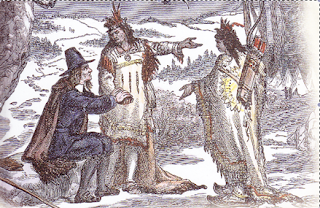
After being charged and tried a number of times, Williams was finally removed from his church position by the General Court. Ultimately, he found he could no longer associate with the church and instead began worshiping in his home with likeminded believers. Finally in 1635, the General Court convicted Roger Williams of sedition and heresy for teaching “diverse, new and dangerous opinions” and ordered that he be banished from Massachusetts Bay colony. Because winter was approaching and he was ill, the court agreed to let him stay temporarily, provided he stop teaching his ideas. Naturally, he didn’t stop teaching, and upon learning the sheriff was coming to arrest him, Williams fled in a blizzard and traveled 55 miles in deep snow, finding refuge with a local Indian tribe until spring.
When spring came, Williams and his followers found a suitable location for a new settlement outside the borders of the Massachusetts Bay land charter, and purchased the necessary lands from the Narragansett tribe. They named their new settlement Providence, based on their belief that divine providence had led them there in their exile. It still retains that name today, incidentally, and is now the capital of Rhode Island.
What made the Providence settlement unique was that it was intentionally set up to be a haven for those “distressed of conscience.” The government of the settlement was specifically limited to civil matters and excluded from religious matters, and all citizens of the settlement were expressly granted freedom of conscience in matters of religion. Naturally, the settlement soon attracted a variety of dissenters and religious free thinkers, welcoming Jews, Quakers, Baptists and all who were elsewhere persecuted for their beliefs. All were treated as equals in matters of government and citizenship, regardless of their religious leanings.
Thus, Roger Williams founded the first place in modern history where citizenship and religion were completely decoupled from one another, providing complete religious liberty and separation of church and state. Though that may sound quite unremarkable to us now, in 1636 it was so revolutionary as to be considered seditious and heretical. Church and state power had been so intertwined for so long that the mere idea of a secular government was practically unthinkable. But Williams thought it, acted on it, and changed the world.
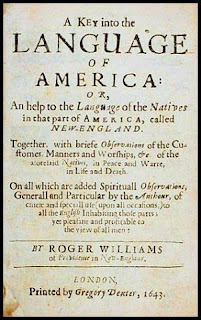
Roger Williams lived a magnificent life, filled with heroic and magnanimous deeds. He learned the language of the local Narragansett tribe and published the first book ever written detailing a Native American language. In it, he stated:
Boast not proud English, of thy birth & blood;
Thy brother Indian is by birth as Good.
Of one blood God made Him, and Thee and All,
As wise, as fair, as strong, as personal.
He earned the tribe’s trust and respect to the point that he was often called upon to keep the peace between the colonies and the Native American tribes. On more than one occasion, he pledged himself as hostage to ensure the safe return of Indian Chiefs from colonial court proceedings.
Williams worked tirelessly to stabilize relations between the colonies, even returning to England to secure an official charter for Providence Plantations. Ultimately his efforts united Providence Plantations and Rhode Island, again under the charter of freedom of conscience. When others sought to usurp control over Indian lands or tribes, Williams fought to have them removed, at one point selling his business to pay for another trip to England, which resulted in a more secure charter, greater protection for Native people, and removal of the usurpers.
Roger Williams opposed slavery and sought every opportunity to limit it. When the Massachusetts Bay Colony passed a law sanctioning slavery, Providence Plantations under Williams’ leadership passed laws limiting the amount of time a person could be held in slavery, bringing it in line with indentured servitude, and also sought to prevent the importation of enslaved Africans.
By the end of his life, Roger Williams was known as the founder of Rhode Island, the founder of the Baptist church, a tremendous and gifted advocate for Native American rights, a friend and defender of marginalized groups including Jews, Quakers and others, an opponent of slavery and infant baptism, and an able preacher, governor, writer and Christian thinker. But his greatest accomplishment is summed up in the following two paragraphs I pulled from Wikipedia:
Williams was a staunch advocate of separation of church and state. He was convinced that civil government had no basis for meddling in matters of religious belief. He declared that the state should concern itself only with matters of civil order, not with religious belief, and he rejected any attempt by civil authorities to enforce the “first Table” of the Ten Commandments, those commandments that deal with an individual’s relationship with and belief in God. Williams believed that the state must confine itself to the commandments dealing with the relations between people: murder, theft, adultery, lying, and honoring parents. Williams wrote of a “hedge or wall of Separation between the Garden of the Church and the Wilderness of the world.” Thomas Jefferson later used the metaphor in his 1801 Letter to Danbury Baptists.Williams considered the state’s sponsor of religious beliefs or practice “forced worship”, declaring “Forced worship stinks in God’s nostrils.” He also believed Constantine the Great to be a worse enemy to Christianity than Nero because the subsequent state involvement in religious matters corrupted Christianity and led to the death of the Christian church. He described the attempt of the state to pass laws concerning an individual’s religious beliefs as “rape of the soul” and spoke of the “oceans of blood” shed as a result of trying to command conformity. The moral principles in the Scriptures ought to inform the civil magistrates, he believed, but he observed that well-ordered, just, and civil governments existed even where Christianity was not present. Thus, all governments had to maintain civil order and justice, but Williams decided that none had a warrant to promote or repress any religious views. Most of his contemporaries criticized his ideas as a prescription for chaos and anarchy, and the vast majority believed that each nation must have its national church and could require that dissenters conform.

Roger Williams’ true legacy is not the Baptist Church, the city of Providence, the state of Rhode Island, the books he wrote or the lives he saved. No, it is the ideas for which he fought, suffered and labored. These very ideas, though revolutionary at the time, were inherited a century later by the founders of America and incorporated into our founding documents. The first amendment to the U.S. constitution is the direct result of the thoughts, ideas, and sacrifices of Roger Williams.
Congress shall make no law respecting an establishment of religion, or prohibiting the free exercise thereof; or abridging the freedom of speech, or of the press; or the right of the people peaceably to assemble, and to petition the Government for a redress of grievances.
Such a wall as this had never been erected between religion and government on a national scale. This grand experiment in freedom of conscience is frankly responsible for all other freedoms we enjoy.
When you think about it, freedom of worship is the most basic and fundamental freedom of all. If the power of the state stops where the individual’s relationship with God begins, then the state is permanently and properly subordinated to God and to the individual. Agency—the issue at stake from the beginning and fought for in battle before the foundation of the earth—is preserved. The value of the individual soul is greater than the value of the entire combined power and wealth of the state, and therefore all other freedoms flow from the value placed on the individual soul in the image of God. We have freedom of speech because we have freedom of conscience. We enjoy freedom of the press because we have freedom of conscience. Indeed, the freedom from unreasonable search and seizure, the right to a fair and speedy trial by a jury of peers, the freedom from cruel and unusual punishments, the right to bear arms, and even the rights to life, liberty and the pursuit of happiness all spring from this first, most inalienable, most fundamental right to an individual relationship with God—unmolested, uncoerced and uncontrolled by the government. And for that, we have Roger Williams to thank.
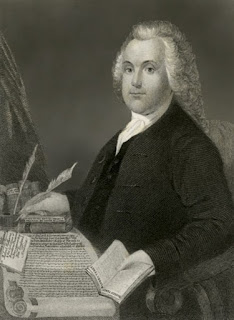
In fact, I think it no exaggeration to call Roger Williams the founder of our nation. Seriously. Everything that is unique and good and godly about the highest aspirations of our founding can be traced directly to Roger Williams, who had the courage to stand against the evils and corruption of church and state, at peril of his own life, and who then acted on his principles to establish the first government and society in modern times based on those principles. If this nation was ever a city on a hill that could not be hid, it surely burned with the spirit of God, which is the spirit of freedom, brought here and established by this “man among the gentiles” who laid the firmest of foundations in our freedom of worship.
And I looked and beheld a man among the gentiles, who was separated from the seed of my brethren by the many waters; and I beheld the spirit of God, that it came down and wrought upon the man, and he went forth upon the many waters, even unto the seed of my brethren who were in the promised land. (1 Nephi 3:20 RE)
He was among the gentiles, indeed among the “mother gentiles” of this nation in England (1 Nephi 3:20 RE). The spirit of God, which Captain Moroni and Parhoron correctly define as the spirit of freedom—religious freedom, to be precise—clearly wrought upon Roger Williams, causing him to go forth upon the waters and come to the promised land. He ended up in very close vicinity to the area of the final Book of Mormon battles, and therefore the remaining remnants of the Lamanites, and more than perhaps any other settler, came “unto” the seed of the Lamanites, learning their language and becoming their friend, champion, and defender. That spirit of freedom that wrought upon him throughout his life shaped the foundation and formed the underpinnings of our nation and all other freedoms we enjoy.
I realize there are many theories as to the identity of the man shown to Nephi and that cases can be made for each candidate. I’m not interested in arguing the relative merits of the various candidates. In this introduction to Roger Williams, I have made the case that he *could* be the man—meaning, his life and history conform very well to the pattern of the man Nephi saw. But I have not yet made the case why I believe he *is* the man; we’ll come to that in future posts. For now, I’ll just state that I have good and sufficient reasons to believe that Nephi saw Roger Williams. And as I said in my last post, this matters a great deal.
And yet, there’s still more to uncover. Why was he shown to Nephi? Why does it matter that we understand who Nephi saw? And how might this all relate to the topic of destruction? Stay tuned…
God requireth not a uniformity of religion to be enacted in any civil state; which enforced uniformity (sooner or later) is the greatest occasion of civil war, ravishing of conscience, persecution of Christ Jesus in his servants, and of the hypocrisy and destruction of millions of souls.
----------------------------------
The God of Peace, the God of Truth will shortly seal this truth, and confirm this witness, and make it evident to the whole world, that the doctrine of persecution for cause of conscience, is most evidently and lamentably contrary to the doctrine of Christ Jesus the Prince of Peace.
Amen.
—Roger Williams, The Bloudy Tenent of Persecution, for Cause of Conscience


